
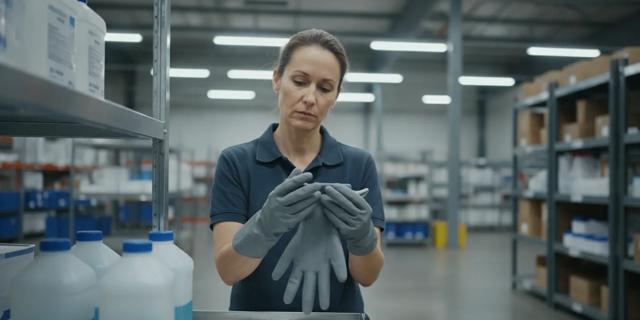
How should supervisors plan glove changes during chemical-cleaning shifts with chemical resistant gloves?
Planning chemical resistant gloves for a cleaning shift is not just a matter of issuing a pair at the start of work. Supervisors need a task-based plan that accounts for the products being handled, the glove maker's compatibility guidance, expected exposure, cuff coverage, and clear change triggers. A documented routine helps crews know what to wear, when to stop and replace it, and how to report a problem.
What should a glove-change plan answer?
A useful plan answers five questions before the shift begins: Which tasks involve chemical contact? Which glove material and model are suitable for those tasks? How will workers keep the glove from being exposed beyond its intended use? What conditions require a change? Where will clean, unused gloves be kept during the work?
Do not set a single change interval for every product or task. A glove's suitability and useful service period depend on the specific glove and chemical, the way the chemical is used, the work conditions, and the manufacturer's instructions. A short wipe-down with one product is not automatically equivalent to a prolonged immersion or handling a concentrate. Use the product label, Safety Data Sheet (SDS), glove manufacturer's information, and your organization's hazard assessment to define the procedure.
OSHA provides workplace safety resources at osha.gov. Use the applicable workplace requirements and your organization's safety process when assessing tasks and protective equipment. This article is a planning aid, not a substitute for a task-specific assessment or the instructions for a particular glove or chemical.
How do you map chemical exposure across a shift?
Start with work as it is actually performed, not just the job title. A cleaner may move between mixing, applying, rinsing, restocking, handling waste, and touching shared tools in one shift. Each transition can change the chance of chemical contact and the kind of protection needed. Walk the route or review the written work sequence with employees who perform it.
- List the tasks. Break the shift into steps such as preparing a solution, filling equipment, applying product, wiping or scrubbing, rinsing, emptying equipment, and cleaning tools.
- Name the product used at each step. Record the product identity and its use condition, such as ready-to-use or diluted, only as specified by its label and site procedure. Do not assume a product is harmless because it is diluted or used briefly.
- Mark likely contact points. Note pouring, splashes, wet surfaces, saturated cloths, equipment connections, and cleanup of spills or waste. Include hand contact with contaminated gloves, handles, and containers.
- Estimate the work pattern. Record whether exposure is intermittent or continuous, how long hands may be in contact, and whether tasks repeat. Treat this as planning information, not as a substitute for a compatibility decision.
- Identify task changes. Flag any step that introduces a different chemical, concentration, temperature, application method, or contact pattern. A change in task can mean the existing glove selection no longer matches the work plan.
Make the task map specific enough for a worker to follow. “Wear gloves for chemicals” leaves too many decisions to each person. “For the listed product and task, use the approved glove specified in the station procedure; change it if it is torn, contaminated inside, or otherwise reaches a defined change trigger” gives the supervisor and worker a process to apply. The actual approved glove and triggers must come from the relevant product and glove information and site assessment.
How should supervisors confirm glove compatibility?
Compatibility is product-specific. Do not select a glove solely by color, thickness, a broad material name, or the phrase “chemical resistant.” Those descriptions alone do not establish that a particular glove is suitable for a particular chemical, task, and exposure pattern. Check the exact glove model's information against the exact chemical product and its intended use.
- Read the chemical label and SDS for the product and use condition. Follow the site's process for identifying the hazards and precautions relevant to the task.
- Consult the glove manufacturer's compatibility information for the exact chemical or chemical mixture, glove model, and relevant conditions. If the information is unclear or does not cover the task, ask the manufacturer or the organization's safety professional before approving the glove.
- Confirm any stated limitations, including exposure conditions and instructions about use, inspection, replacement, cleaning, or disposal. Do not extrapolate a result for one chemical or glove model to another.
- Check the glove's intended application and the work method. A glove selected for incidental contact should not be assumed suitable for a different pattern of exposure.
- Record the source and date of the compatibility decision so the team can revisit it if the chemical, glove, or procedure changes.
When a mixture is involved, use the information applicable to the actual mixture and process rather than selecting based on one ingredient without review. If available documentation does not resolve compatibility, pause the task and escalate the question through the established safety channel. A purchasing deadline is not a reason to guess.
How do exposure duration and cuff coverage affect the plan?
Duration is one part of task planning, but it is not a universal countdown. A glove change schedule should be grounded in the instructions and assessment for the specific glove and task. Do not invent a fixed number of minutes or assume that every glove remains suitable for an entire shift. Equally, do not infer an exact replacement time from a generic material description.
Describe exposure in practical terms: repeated brief handling, continuous wet work, a possible splash, or a task in which hands may be immersed. Share that description when confirming compatibility. Identify whether the task involves concentrated product, a prepared solution, or residue on tools, using the product's instructions to define the actual process. If work conditions or product use differ from those reviewed, stop and reassess instead of applying the old plan automatically.
Cuff coverage also needs to match the direction and likelihood of contact. The written procedure should say how the glove is worn with the garment or protective sleeve used for the task, based on the work method and applicable guidance. Avoid a vague instruction such as “cover the wrist” if the task can expose the forearm or if the clothing arrangement is not specified. Have the worker demonstrate the approved arrangement during training, and review it when the task or protective equipment changes.
Fit and dexterity matter to whether a person can carry out the procedure as intended. The worker should be able to perform the task without the glove slipping, tearing, or interfering with safe handling. Establish an approved range of sizes using the selected product's available specifications, then make the correct size accessible at the work area. Never assume one size fits an entire crew.
Which conditions should trigger an immediate glove change?
The plan should separate scheduled replacement, where the product and glove instructions establish one, from event-based changes. Workers need permission to stop and replace a glove when a problem appears; they should not have to wait for a routine break or scheduled interval.
| Condition or event | Supervisor's planned response | What to record or review |
|---|---|---|
| Tear, hole, split seam, or other visible damage | Stop the task safely, follow the site's removal and disposal procedure, and replace with the approved glove before resuming. | Note the task and circumstances; check whether fit, handling, or work method contributed. |
| Known chemical contact inside the glove | Stop and follow the site's response procedure for potential skin contact; remove and replace the glove as directed. | Record the event through the required reporting channel and review the source of entry. |
| Unexpected splash, spill, or change in exposure | Pause work, follow the spill or exposure procedure, and confirm whether the current glove remains suitable before restarting. | Document the product and task change; update the assessment if needed. |
| Glove reaches a manufacturer- or site-defined service limit | Replace it at the specified point; do not extend use for convenience or until the end of a shift. | Track the defined interval or condition and confirm workers understand it. |
| Glove is contaminated, degraded, or difficult to remove safely | Follow the established removal, disposal, and hand-cleaning instructions; provide a clean replacement if the task is approved to continue. | Review handling, storage, and disposal practices with the crew. |
| Task or chemical differs from the approved plan | Hold the task until compatibility and protective equipment are checked for the new conditions. | Revise the task record and communicate the decision before work resumes. |
The table is a framework, not a replacement for the glove maker's instructions or a site-specific response procedure. Adapt its terms to your approved equipment and work rules. For example, do not treat a glove that looks intact as proof that it remains suitable after an exposure condition outside the plan.
How can teams change gloves without spreading contamination?
Changing gloves can itself create contact risks if workers touch the contaminated outer surface and then handle clean supplies, door hardware, or their skin. Teach a removal sequence that follows the glove and chemical instructions and the site's established procedure. Do not invent a universal technique for every glove type or contamination scenario.
Before the shift, identify a designated place for clean replacements and the route for used gloves. Keep unused stock protected from splash, dust, moisture, and contact with chemicals. Make disposal containers or the site's designated waste route clear to the crew. Whether a used glove can be cleaned or reused must come from the manufacturer's instructions and site procedure; do not assume that rinsing or wiping makes it suitable for continued use.
Plan for clean hands and hand hygiene in the transition. The procedure should explain what workers do after removal and before putting on a replacement, including how to avoid touching clean stock with contaminated gloves. If a worker suspects contact inside the glove, direct them to the workplace exposure response rather than treating a new pair as the only needed step.
How do you turn the shift plan into a stocking routine?
A glove standard works only if the approved size and type are available where and when they are needed. Use actual task assignments and usage records to estimate case requirements. Start with the number of workers by shift, the tasks requiring gloves, the approved size mix, and the planned replacement events. Add a reasonable site-defined reserve based on observed use and resupply timing. Do not build an order estimate by assuming that each worker uses one pair per shift if the work plan includes multiple change triggers.
- Separate demand by task and size. Count the workers assigned to each task and use observed fit information to forecast the mix of sizes. Keep product or model distinctions clear if more than one approved glove is used.
- Use consumption records. Track issues and replenishment by location, task, size, and period. Compare actual use with the planned work so unusual increases can be investigated rather than automatically treated as normal demand.
- Include shift handoffs. Set a minimum available amount for each active work area and clarify who checks it at the beginning or end of a shift. A central stockroom count may not reveal that a crew's station has run out.
- Define a reorder point. Use the organization's lead time, delivery schedule, case quantity, and safety-stock policy. The reorder point should account for the approved mix, not just total gloves on site.
- Control substitutions. If the usual glove is unavailable, do not let staff select an alternative based only on appearance or material. Require a compatibility review and authorization before a substitute is used.
Commercial buyers can use the janitorial supply catalog as a starting point for related supply purchasing. To browse brands and other items for a cleaning program, see the brand directory and catalog pages for Zep, Diversey, and Maintex. These destinations are for broader catalog navigation; verify that any item chosen matches the task and purchasing requirements. They are not endorsements of a glove or a compatibility claim.
What should supervisors document and review?
Keep the documentation useful at the point of work. A long file that cannot be found during a shift is less practical than a concise task sheet supported by the product and glove information. A controlled record can include:
- Task name, work location, product identity, and the use condition covered by the procedure.
- Approved glove model and size range, with the compatibility information and review date.
- Expected exposure pattern, cuff or sleeve arrangement, and any manufacturer-defined limits or change instructions relevant to the task.
- Event-based change triggers, safe removal and disposal process, and the method for requesting a replacement.
- Storage location, minimum stock level, person or role responsible for checks, and approved escalation route when supply is unavailable.
- Training date or acknowledgment, observed issues, and the action taken to correct a gap.
Review the plan whenever a chemical, glove model, supplier specification, dilution or application method, work task, or site condition changes. Also review it after a tear, unexpected contact, repeated complaints about fit, or a pattern of unusually high consumption. Ask workers whether the stated triggers are clear and whether clean replacements are reachable during the work. Their feedback can reveal practical gaps that a written procedure misses.
How can a supervisor brief the crew before work starts?
A short pre-shift briefing can connect the written plan to the real assignment. Point out the task-specific glove, where sizes are stored, what conditions require stopping and changing, and whom to contact if the product or work differs from the plan. Ask one or two workers to explain the change triggers in their own words. If a task involves a new product or unusual exposure, do not rely on a quick reminder; complete the required review before assigning the work.
Make clear that workers should report damage, suspected contamination inside a glove, unexpected splashes, or lack of the approved size promptly. The response should focus on stopping exposure, following site procedure, and correcting the supply or task issue. Avoid messages that encourage people to stretch glove use to save stock. Ordering and shift planning should support the approved procedure, not weaken it.
What common planning mistakes should you avoid?
- Using one time limit for every task. Build change timing from the exact glove and task guidance, not a blanket duration.
- Choosing by material name alone. Confirm compatibility for the exact product and glove model, and ask for help when the documentation is incomplete.
- Ignoring brief tasks between longer jobs. Map transitions, refills, tool cleanup, and waste handling as well as the main cleaning step.
- Assuming an intact appearance proves suitability. Use the manufacturer's limits and approved triggers; visual checks cannot answer every compatibility question.
- Stocking only one size or relying on substitutions. Plan the size mix and require review before changing an approved glove.
- Putting replacements far from the work. Confirm that clean stock is accessible without touching contaminated surfaces or interrupting the safe procedure.
- Failing to update the written plan. Reassess after changes in product, glove, task, or process, and communicate the change before the next shift.
Explore janitorial supplies for your operation
Frequently Asked Questions
How often should chemical resistant gloves be changed?
There is no single interval that applies to every glove and chemical-cleaning task. Follow the exact glove manufacturer's guidance and the workplace assessment, and change gloves when a defined limit or event trigger is reached. Replace damaged or internally contaminated gloves according to the site's procedure, and pause if the task changes beyond the approved plan.
Can one glove type be used for every cleaning chemical?
Do not assume so. Confirm the exact glove model against each chemical and use condition through manufacturer information and the organization's assessment. When documentation does not cover the product or task, seek a qualified review before approving it.
Should workers change gloves between different cleaning products?
Follow the site's product-specific procedure. A transition to a different chemical or task is a reason to check whether the current glove remains suitable and whether it is clean enough for the next step. The plan should specify when a change is required rather than leaving the decision unclear.
What should a supervisor do if the approved glove is out of stock?
Do not let workers select a substitute based only on appearance or a general material description. Pause or reassign the task as appropriate under site rules, then have the alternate glove reviewed for the actual chemical and exposure before use. Record and correct the stock gap so the same shortage is less likely at the next shift.
What is the most useful measure for improving glove ordering?
Track use by task, size, location, and shift, then compare it with the planned replacement triggers and scheduled work. This helps distinguish routine demand from damage, fit problems, unexpected exposure, or a change in process. Update the case plan from verified use while keeping the approved glove standard intact.
A reliable glove-change plan connects each cleaning task to verified compatibility, clear replacement triggers, accessible clean stock, and a reviewable record. When any of those pieces changes, pause, confirm the new conditions, and brief the crew before work continues.
Recent Posts
-

How should supervisors plan glove changes during chemical-cleaning shifts with chemical resistant gloves?
Planning chemical resistant gloves for a cleaning shift is not just a matter of issuing a pair at th …Nov 9th 2026 -

Nitrile gloves: How should a janitorial manager build a glove-size stocking plan?
A dependable nitrile gloves stocking plan starts with the people who use them, the tasks they perfor …Nov 6th 2026 -

How Should Caterers Organize Food Storage Container Sizes and Lids?
Food storage containers are easier to manage when a catering team chooses sizes for defined jobs ins …Nov 5th 2026