
Paper vs Plastic Cups for Foodservice
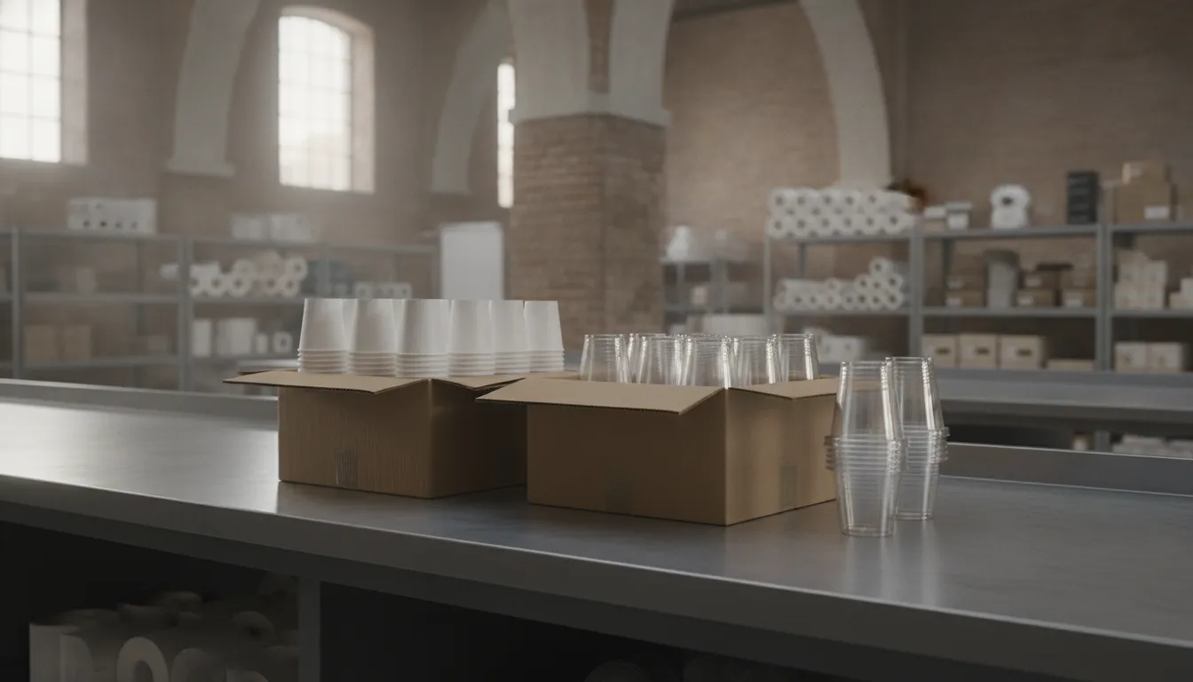
Paper vs plastic cups for foodservice is a buying decision, not a slogan. A cafe, caterer, or breakroom that pours coffee needs a lined paper hot cup. A station that fills iced drinks needs a clear plastic cold cup. One material does not cover both jobs, and the wrong lid wastes more product than the cup price ever saves.
Shop disposable cups and lids by the case
Discount Janitorial Supply is a wholesale supplier in Rome, New York. The catalog carries paper hot cups, plant-lined compostable hot cups, and clear plastic cold cups, with tiered case pricing and same-day shipping on most items. East Coast delivery is generally 1 to 3 days. Qualifying orders shipped outside New York State may have no sales tax. Sales tax still applies on orders in New York State.
Start with the drink, not the material
Match the cup to the beverage before you compare unit cost. Hot coffee, tea, cocoa, and soup need a paper wall with a lining that keeps liquid from soaking through. Iced tea, soda, lemonade, and cold coffee need a clear cup that stays rigid with ice.
The FDA conditions of use for food contact substances separate hot fill and pasteurization above 150 degrees F from room-temperature, refrigerated, and frozen use. That split is the practical test for a cup program. A hot pour is a different condition of use than a cold fill stored with ice. Ask the supplier which condition the SKU is built for, and do not assume a cold cup is approved for boiling liquid because it is labeled foodservice.
A short menu map keeps the order list honest:
- Hot drinks and soup to go: lined paper hot cups, single wall or insulated, with a matching hot-cup lid.
- Iced and fountain drinks: clear plastic cold cups, often PET or polystyrene, with a flat or dome lid sized to that rim.
- Sauces, dressings, and samples: small plastic portion cups, which are not drink cups and should not share a lid bin with beverage lids.
- Counter service with both menus: two cup families, not one "house cup" stretched across hot and cold.
When paper cups are the right buy
Paper wins when the drink leaves the brewer or kettle hot. A polyethylene lining is a moisture barrier. It keeps coffee inside the cup. It is not a compostable claim. A plant-based PLA lining is a different product, and it is commercially compostable only where a facility accepts that liner.
Live examples from the Discount Janitorial Supply catalog show how the specs split:
- The Solo paper hot cup, 12 oz, white, 50 per pack (SCC412WN2050), is lined with polyethylene. The listing calls out a smooth rolled rim for a leak-resistant lid fit, and it is sold for coffee, tea, or cocoa.
- The Eco-Id compostable paper hot cup, 10 oz, white and green, 500 per carton (PRKPK56223CT), uses a leak-resistant PLA lining. It is sold as stackable stock for a breakroom or beverage station.
- The Vegware 89-Series hot cup, 12 oz, 1,000 per carton (VEGLV12G), uses a plant-based PLA lining, fits Vegware 89-Series lids, and is described as commercially compostable where accepted. The same cup is also listed for soup to go and for portioning fries.
Read the liner before you print a menu claim. A polyethylene-lined cup and a PLA-lined cup can look the same on a shelf. Only the PLA-lined cup can support a commercial-compost story, and only if your hauler and local rules accept that product. Do not label a polyethylene-lined cup compostable because the wall is paper.
Paper storage and service notes
Paper cartons are bulky and they crush if staff stack cases above the printed limit or store them in a damp mop closet. Keep hot-cup stock dry, off the floor, and grouped by ounce and lid family. A 10 oz, 12 oz, and 16 oz paper cup do not share one lid. The Vegware listing is explicit: that 12 oz cup fits the 89-Series lid, not a generic hot lid from another line.
Insulated or double-wall paper costs more per cup and takes more shelf space. It can remove the need for a separate sleeve on a high-volume coffee line. A single-wall polyethylene cup plus a sleeve is often cheaper for a breakroom that pours fewer hot drinks. Price the sleeve as part of the cup, not as an afterthought.
When plastic cups are the right buy
Plastic wins on cold drinks where guests buy with their eyes. A clear wall shows ice, fruit, and fill level. It also survives a sleeve of cups better than paper when staff grab from a busy fountain station.
Two cold-cup lines in the catalog show the material difference:
- Kal-Clear PET cold drink cups, 7 oz, clear, 1,000 per carton (FABKC7), keep liquids contained without flavor or odor transfer. The rolled rim is for sipping. The listing specifies PET. That is a cold-drink cup, not a coffee cup.
- RK ribbed cold drink cups, 10 oz, clear, 100 per sleeve and 25 sleeves per carton (FABRK10), use sidewall ribbing for strength and embossed capacity marks for fountain filling. The listing specifies polystyrene and a printable surface. Polystyrene and PET are both plastic, and they are not interchangeable for recycling or lid fit.
Portion cups are a third plastic item buyers mix into the same order by mistake. The 2 oz black plastic portion cup, 2,400 per carton (PCTYSPP200EA), is built for snacks, sauces, and sampling. Pair it with its own lid, sold separately. Do not count those cartons in your beverage-cup par level.
What plastic does not do
Do not pour boiling coffee into a PET or polystyrene cold cup. The FDA hot-fill conditions above are a reminder that temperature is part of the food-contact use, not a style choice. A cold cup that softens, leaks, or transfers odor is a service failure, even if the case price looked lower.
Clarity is the reason to buy plastic. If the drink is hot, opaque, or meant to be written on with a marker, paper is the working tool. Baristas mark names on a paper wall faster than on a clear cup, and a paper wall does not show condensation the way a cold PET cup does.
Lids, rims, and straws decide the order
A cup without its lid is half a SKU. Hot paper cups use sip lids from the same rim family. Cold plastic cups use flat lids, straw-slot lids, or dome lids. The diameter has to match that cup, not the ounce printed on the side. A 9 to 10 oz cold-cup lid will not seat on a 7 oz Kal-Clear rim just because both are small.
Build the purchase order in pairs:
- Name the drink and the temperature.
- Pick the cup ounce and the material that matches that temperature.
- Add the lid SKU that the manufacturer says fits that series, and order lids in the same case rhythm as cups.
- Add straws only for cold drinks that use a slot or dome. Keep them with the cold-cup bin, not the hot-cup bin.
The straws category sits next to cups and lids for that reason. A paper straw and a plastic straw are a separate choice. Follow the same rule you use for cups. Buy the straw your service and local rules allow. Do not assume a straw fits every lid slot.
Cutlery is the other item crews toss into a cup order. If the station is a catering line rather than a drink station, pull disposable cutlery as its own line. It does not change which cup you need, and mixing the two on one shelf tag is how a Friday event runs out of forks while cups sit unopened.
Paper vs plastic cups for foodservice buyers
Use the table as a purchasing screen. It is not a claim that one material is greener in every city. Disposal depends on your hauler, your local rules, and the exact liner or resin on the SKU you receive.
| Buying question | Lined paper hot cup | Clear plastic cold cup |
|---|---|---|
| Best drink. | Coffee, tea, cocoa, or soup to go. | Iced drinks, soda, juice, or cold coffee. |
| Typical material on our catalog SKUs. | Paperboard with a polyethylene or PLA lining. | PET or polystyrene. |
| What the guest sees. | An opaque wall that is easy to mark with a name. | A clear wall that shows ice and fill level. |
| Lid rule. | Use a sip lid from the same series and rim. | Use a flat, straw-slot, or dome lid matched to that rim. |
| Storage risk. | Crushing and moisture in the stock room. | A wrong lid mixed into a look-alike sleeve. |
| Disposal language you can defend. | PLA-lined cups only where commercial composting accepts them. Polyethylene-lined cups are not a compost claim. | Recyclable only where your program accepts that resin and the cup is empty enough to process. Do not call it compostable. |
| Case examples. | Examples include a 50-pack paper cup, a 500-count PLA carton, and a 1,000-count Vegware carton. | Examples include a 1,000-count PET carton and a 2,500-count ribbed carton. |
The U.S. Environmental Protection Agency's guide to food service ware ranks reusable ware first when a wash-and-return system exists. Certified commercially compostable ware comes next. Certified recyclable ware is last. Reusables are outside this article.
For disposables, the EPA point that matters is narrow. Compostable ware helps only if it is collected separately and a commercial facility can take it. Recyclable ware still fails when food and liquid contaminate the load. Buy the cup your service can actually sort.
How to set case counts without guessing
Count drinks, then convert to cartons. A 50-pack of 12 oz paper cups is a small top-up for a single brewer. A 500-count or 1,000-count carton is the wholesale unit for a steady coffee line. A 1,000-count PET cold-cup carton and a 2,500-count ribbed carton cover a fountain station for much longer than a retail sleeve, and they take real shelf space.
A simple par check:
- Write the number of hot drinks and cold drinks you serve on a busy day, separately.
- Multiply by the days you want on the shelf before the next delivery. East Coast orders from Rome generally arrive in 1 to 3 days, so a one-week par is a reasonable start if you are not remote.
- Divide by the case count on the SKU, and round up. Order the matching lid at the same multiple.
- Keep one backup case of the highest-volume size, not one backup of every size.
Tiered pricing on the product page changes the math once you pass a quantity break. Compare the delivered case price, including whether the ship-to is outside New York and therefore may avoid sales tax, against the cost of an emergency retail run. Do not compare a 50-pack shelf price with a 1,000-count carton price as if they were the same unit.
If the location also stores food, keep that plan on its own page. Container sizes and lid colors are covered in the caterer container organization guide, and bag gauges belong in the wholesale food storage bags buying guide. Those SKUs do not substitute for a drink cup.
A short buying standard you can hand to a manager
Write the standard in one paragraph and tape it to the order sheet. Hot beverages use lined paper cups and the series lid named on that SKU. Cold beverages use clear PET or polystyrene cups and the lid that fits that rim. PLA-lined paper cups are the only paper cups that may be described as commercially compostable, and only where the local facility accepts them. Polyethylene-lined paper cups stay in the trash or in whatever program your hauler confirms in writing. Portion cups stay on the condiment list.
Then place the standing order through the food service disposables catalog, or send volume and ship-to details through wholesale inquiries when you need a quote across several sizes. For a one-location breakroom, the 12 oz polyethylene paper cup and one clear cold-cup size are enough to start. For a caterer running coffee and iced service, stock both liners only if you have confirmed compost service. Otherwise buy polyethylene paper for hot and PET or polystyrene for cold, and skip the compost language on the menu.
Request a wholesale quote for cups and lids
Frequently asked questions
Can one cup cover hot and cold drinks?
No. Paper hot cups are built for coffee, tea, and soup. PET and polystyrene cold cups are built for iced and fountain drinks. Running one SKU across both menus is how lids leak and cups soften during a rush.
Is a paper cup automatically compostable?
No. A polyethylene lining is a moisture barrier, not a compost claim. A PLA-lined cup, such as the Vegware 89-Series or the Eco-Id 10 oz cup in our catalog, is commercially compostable only where a facility accepts that product. Confirm the liner on the carton before you print a claim.
Are clear plastic cups recyclable?
Only if your local program accepts that resin and the cups are empty enough to process. PET and polystyrene are different plastics. The EPA notes that food-soiled food service ware is a weak recycling stream. Do not label a cold cup recyclable or compostable on a menu unless your hauler has confirmed that exact item.
How many cups should a small cafe keep on hand?
Count a busy day's hot drinks and cold drinks separately, multiply by the days until the next delivery, and divide by the case count. A 50-pack is a top-up. A 500-count or 1,000-count carton is the wholesale unit. Order the matching lid at the same rate.
Where do portion cups fit?
Portion cups are for sauces, samples, and sides. The 2 oz plastic portion cup in the catalog pairs with its own lid and should not be counted as a beverage cup or stored in the drink-lid bin.
Recent Posts
-

Hand Sanitizer Stand Placement for Workplace Access
A hand sanitizer stand works best when people encounter it at the moment they need it, not when they …Nov 24th 2026 -
Janitorial Supplies: Organize a Supply Room
A crowded closet turns janitorial supplies into a guessing game. Crews waste minutes hunting for the …Nov 24th 2026 -

Restaurant Supply Purchasing: An Operator's Planning Guide
A dependable restaurant supply plan does more than keep shelves full. It helps operators connect dai …Nov 23rd 2026