
Bulk Hand Soap Commercial Buying Guide for Facilities
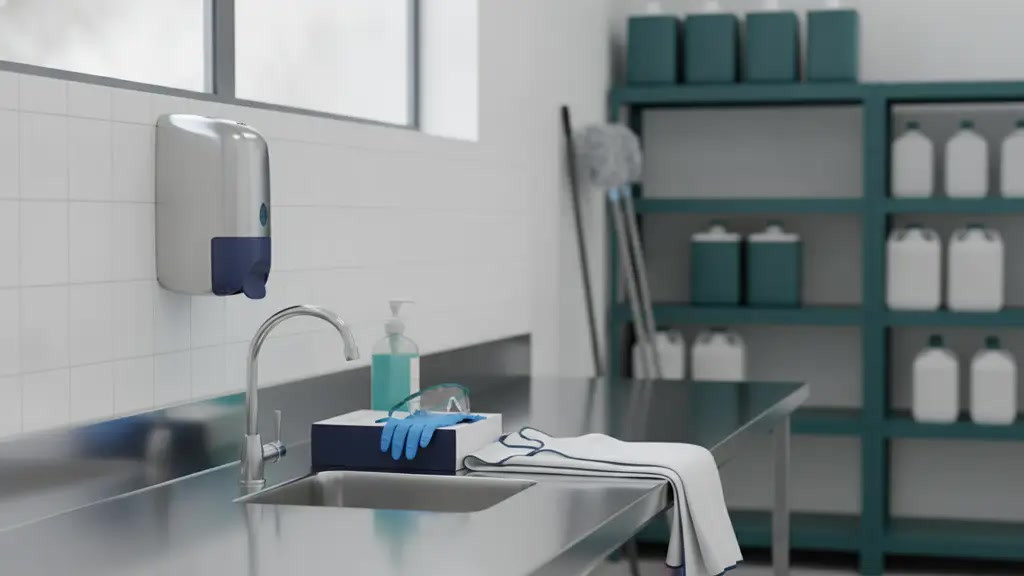
Commercial hand hygiene is not a single-product purchase. Facility managers, building service contractors, and procurement teams need soap that fits the dispenser, supports the work environment, and can be replenished before a restroom or crew supply cabinet runs empty. They also need PPE that matches the actual hazards employees face. This guide explains how to compare bulk hand soap commercial options with sanitizer, gloves, eye protection, and other facility safety supplies so you can build a practical purchasing plan.
Talk with Discount Janitorial Supply about a wholesale hand hygiene and PPE order when you need help comparing case quantities, product fit, or recurring supply needs.
Bulk hand soap commercial buying: the short answer
The best bulk hand soap for a commercial facility is the formula and package that match the soil level, dispenser system, handwashing locations, storage capacity, and replenishment schedule. General-purpose liquid or foam soap works for many restrooms and breakrooms. Heavy-duty hand cleaners are better suited to maintenance, mechanical, industrial, and other work areas where employees need to remove oils, grease, or stubborn soil. Hand sanitizer is a supplement for times when soap and water are not readily available, not a universal replacement for handwashing.
- Start with the site: list every restroom, breakroom, production area, service closet, mobile crew kit, and other hand hygiene point.
- Match the format: compare foam, liquid, lotion, cartridge, refill, and bottle systems against each dispenser already installed.
- Match the formula to the job: select a mild everyday soap for routine washing and a heavy-duty cleaner only where the work creates heavier soil.
- Plan the whole station: pair soap with water, hand drying, sanitizer where appropriate, and clear replenishment ownership.
- Buy PPE from the hazard assessment: choose gloves, eye and face protection, protective clothing, or respiratory protection based on the task and product label, not a generic one-size-fits-all kit.
1. Map the hand hygiene program before you compare products
A product list is only useful when it reflects how people use the facility. Walk the site or review floor plans and identify who uses each station, what work happens nearby, and how often the station is serviced. A corporate office restroom, a foodservice prep area, a public-facing lobby, and a maintenance shop may all need different combinations of products.
For each location, record:
- Number and type of dispensers already installed
- Whether the dispenser accepts cartridges, bulk liquid, foam, or a proprietary refill
- Approximate daily traffic and peak-use periods
- Whether employees handle food, chemicals, oils, waste, or other difficult soils
- Access to running water and hand-drying supplies
- Storage space for cases and reserve refills
- Who checks the station and who places the reorder
This inventory prevents a common purchasing error: selecting a low unit-cost refill that cannot be used in the dispensers on site. It also gives procurement a usable baseline for comparing case pack, refill capacity, expected consumption, and delivery timing.
2. Choose foam, liquid, lotion, or heavy-duty hand cleaner
Soap format affects user experience, dispenser compatibility, consumption, and maintenance. No format is best for every facility. Compare the product, dispenser, refill, and application as one system.
Foam hand soap for high-traffic restrooms
Foam soap is often a practical option for public restrooms, offices, schools, healthcare-adjacent spaces, and other high-traffic areas where users expect quick dispensing. It can provide a ready-to-use lather at the dispenser, but the refill must be approved for the specific dispenser. Verify cartridge size, valve design, and replacement procedure before changing brands or product families.
Foam is a strong candidate when you want:
- Consistent dispensing from a compatible cartridge system
- A format that is easy for visitors and employees to use
- Simple visual checks for refill status
- A standardized restroom program across multiple sites
Review the commercial hand soap catalog and compare the refill format with the dispensers already installed.
Liquid soap for flexible facility use
Liquid soap is available in a wide range of formulas and package sizes. It can work well in restrooms, breakrooms, service areas, and wall-mounted or countertop dispensers designed for liquid refills. Because liquid systems vary widely, confirm whether a product is intended for a bulk-fill dispenser, a sealed refill, or a specific bottle and pump.
Liquid soap may be the right choice when a facility needs:
- Multiple formula options for different locations
- A refill or bottle size that fits an existing purchasing routine
- General-purpose handwashing in offices, schools, facilities, or foodservice areas
- Easy comparison of case quantity and reserve inventory
Do not assume that two liquid products can share a dispenser. Mixing incompatible formulas or refills can create clogged pumps, inconsistent dosing, leaks, and avoidable maintenance calls.
Lotion and skin-care formulas for frequent washing
Employees who wash their hands often may prefer a formula that leaves their skin feeling comfortable after repeated use. A lotion-style or moisturizing hand soap can be worth evaluating for offices, hospitality areas, healthcare support spaces, and other environments where frequent handwashing is part of the workday. Balance comfort with soil-removal needs, fragrance expectations, dispenser compatibility, and the requirements of the work area.
For a high-frequency program, ask users and custodial staff about dry skin complaints, clogged pumps, fragrance concerns, and refill changes. A product that people avoid using is not a successful hand hygiene program, even if the case price looks attractive.
Heavy-duty hand cleaner for maintenance and industrial soils
Maintenance crews, mechanics, installers, and industrial workers may encounter grease, oil, adhesives, ink, carbon, or other stubborn soils that a mild restroom soap is not designed to remove. Heavy-duty hand cleaners are formulated for these applications, but the product should still be selected from the manufacturer instructions and the actual soil profile.
Discount Janitorial Supply carries SC Johnson Professional hand-care products, including heavy-duty options such as Kresto Classic heavy-duty hand cleaner and Solopol HD hand soap. Confirm the current package, dispenser or bottle requirements, and product instructions before standardizing a crew-wide program.
3. Match the refill to the dispenser, not the other way around
Dispenser compatibility is one of the most important details in a bulk hand soap order. A product can be an excellent formula and still be the wrong purchase if the refill does not seat correctly, the pump is not designed for that viscosity, or the cartridge cannot be secured in the existing unit.
Before ordering, verify:
- Dispenser manufacturer, model, and refill system
- Cartridge or bottle volume and case quantity
- Foam versus liquid pump design
- Manual, push, lever, or touch-free activation
- Replacement frequency and ease of servicing
- Whether the station also needs a catch tray or other accessory
For new construction or a facility-wide refresh, choose the dispenser and refill system together. For an existing site, retain a sample empty refill or photograph the connection point so the supplier can confirm the match. The dispensers and hand-care category can help you evaluate the equipment side of the program.
4. Add sanitizer where it supports the handwashing plan
Hand sanitizer can make hand hygiene more accessible near entrances, shared equipment, high-touch areas, and work zones without a convenient sink. The CDC recommends alcohol-based sanitizer with at least 60 percent alcohol when soap and water are not available. The same guidance explains that soap and water are preferred when hands are visibly dirty or greasy and are important for removing some germs and chemicals.
Use the CDC workplace hand hygiene guidance to build placement and training rules around your facility. In practice, buyers should:
- Place sanitizer where people naturally pause or transition between tasks.
- Keep soap, water, and drying supplies available at primary handwashing stations.
- Choose a dispenser and refill system that staff can inspect and service.
- Read the product label and follow storage, use, and fire-safety directions.
- Train employees that sanitizer is not a substitute for washing when hands are visibly soiled.
For a broader selection, review the hand sanitizer category and the SC Johnson Professional hand sanitizer selection. Product availability and package details can change, so confirm the current listing before issuing a purchase order.
Browse hand hygiene, facility, and safety supplies in the full catalog to compare categories before you finalize a recurring order.
5. Build a PPE buying plan around the hazard assessment
Hand soap and PPE solve different parts of a facility safety program. Soap supports hand hygiene. PPE creates a barrier or provides protection against a specific workplace hazard. Start with the task, product label, safety data sheet, and hazard assessment, then select the PPE that fits the work.
OSHA's 29 CFR 1910.132 general PPE requirements addresses hazard assessment, selection, and use of personal protective equipment. OSHA's hand protection standard addresses selecting hand protection based on the hazards present. These references are a starting point, not a replacement for your organization's safety professional, written procedures, or the chemical manufacturer's label and SDS.
Disposable gloves
Glove selection should consider the chemical or soil, contact time, splash risk, required dexterity, tear and puncture exposure, employee fit, and whether the task involves food, healthcare, waste, or general cleaning. Nitrile and vinyl gloves may serve different applications. Do not describe a glove as chemical-proof or universally protective. Review the specific product documentation and chemical compatibility information for the task.
The commercial glove category is a useful starting point for comparing available materials, sizes, and package formats. Standardize a small number of approved options where practical, but keep task-specific alternatives for work that requires different resistance, thickness, cuff length, or dexterity.
Eye and face protection
Cleaning chemical splashes, transfer of concentrated products, pressure washing, floor-care work, and maintenance tasks may create eye or face hazards. Select safety glasses, goggles, or face protection according to the task and written hazard assessment. Comfort and anti-fog performance can influence whether employees wear the protection correctly, but those features do not replace the required level of protection.
Review the eye protection category when building a site or crew kit. If a task can create a splash or projectile hazard, ask the responsible safety professional whether glasses, goggles, a face shield, or a combination is appropriate.
Protective clothing and respiratory protection
Aprons, gowns, coveralls, sleeves, and other protective clothing may help limit contact with certain soils, splashes, or contamination. Respiratory protection requires a more specific program than simply placing masks in a supply cabinet. Employers should follow the applicable standard, hazard assessment, product label, fit requirements, training, and medical or program requirements when respiratory protection is necessary.
Use the PPE category to locate facility safety supplies, and review respiratory protection products only after the responsible program owner has identified the correct protection level.
6. Compare wholesale suppliers beyond the unit price
For recurring facility purchases, the lowest visible unit price is only one part of total procurement cost. A more useful comparison looks at the complete order and the effort required to keep every site supplied.
| Buying factor | Questions to ask |
|---|---|
| Catalog depth | Can one supplier cover hand soap, sanitizer, dispensers, gloves, eye protection, paper products, and related facility needs? |
| Case and volume pricing | Are case packs, quantity breaks, and wholesale pricing visible before the order is placed? |
| Product documentation | Can the supplier help locate manufacturer specifications, labels, or SDS documents when the safety team needs them? |
| Compatibility support | Can someone confirm that a refill fits the dispenser and that the selected package matches the site requirement? |
| Delivery fit | Does the supplier's stated shipping coverage and timing support the facility's replenishment schedule? |
| Order consolidation | Can the buyer reduce purchase orders by combining hand hygiene, PPE, cleaning chemicals, paper, and facility supplies? |
| Account service | Is there a clear path for a recurring order, quote request, substitution question, or urgent replenishment? |
Discount Janitorial Supply serves commercial buyers from Rome, New York, with a wholesale-focused catalog that includes janitorial, facility-maintenance, foodservice, office, and safety supplies. The catalog highlights SC Johnson Professional and Betco product lines, tiered volume pricing on product pages, and a range of PPE and hand hygiene categories. Same-day shipping applies to most items, while East Coast delivery is generally one to three days. Treat those shipping statements as planning guidance, not a promise for every item or destination, and confirm current availability before committing to a deadline.
7. Use a replenishment formula that your team can repeat
Once you select a product, make reordering measurable. Track the number of refills used by location during a normal period, then add a reserve that reflects delivery time, seasonality, occupancy changes, and the cost of a stockout.
A simple starting formula is:
Reorder point = average weekly usage x expected delivery time in weeks + safety stock
This is not a substitute for an inventory system, but it gives a facilities team a shared method. Record usage separately for high-traffic restrooms, low-traffic offices, maintenance shops, and mobile crews. Review the result after a month or two and adjust for seasonal events, new contracts, staffing changes, or a dispenser conversion.
Keep a minimum reserve for critical stations. Store cases in a dry, appropriate location, rotate older stock first, and make one person or team responsible for checking both the active dispenser and the reserve inventory. A reorder plan should also identify approved substitutes, because an unplanned product change can create dispenser, training, or PPE-fit problems.
8. A practical commercial hand hygiene and PPE checklist
- List every handwashing and sanitizer station by building, floor, and room.
- Record each dispenser model and compatible refill format.
- Separate everyday hand soap from heavy-duty cleaner applications.
- Confirm product labels, manufacturer instructions, and SDS access for relevant products.
- Identify where soap and water are required and where sanitizer can supplement the program.
- Complete or update the workplace hazard assessment before selecting PPE.
- Set approved glove materials, sizes, cuff requirements, and task-specific alternatives.
- Identify when eye, face, clothing, or respiratory protection is required.
- Compare case quantity, tiered volume pricing, storage capacity, and delivery timing.
- Set a repeatable reorder point and assign ownership for inspections.
- Review the program after a dispenser change, new chemical, new client site, or change in task.
Request a wholesale supply conversation for your facility, cleaning crew, or multi-site operation before your next recurring order. A focused product review can help you compare hand soap, sanitizer, dispensers, gloves, and other PPE against the way your team actually works.
Commercial hand soap and PPE buying FAQ
What is the best bulk hand soap for a commercial facility?
The best option is the one that matches the dispenser, handwashing location, soil level, user frequency, and replenishment plan. General-purpose foam or liquid soap fits many restrooms and breakrooms, while a heavy-duty hand cleaner may be more appropriate for maintenance or industrial soils. Confirm the product instructions and dispenser compatibility before ordering by the case.
Is foam soap better than liquid soap for commercial restrooms?
Neither format is universally better. Foam may work well in a compatible high-traffic cartridge system, while liquid soap can offer broader formula and package choices. Compare the dispenser, refill availability, service routine, user experience, and total procurement effort rather than choosing on format alone.
When should a facility use hand sanitizer instead of soap and water?
Use alcohol-based hand sanitizer when soap and water are not readily available, provided the product contains at least 60 percent alcohol and the label directions are followed. Soap and water are preferred when hands are visibly dirty or greasy and remain essential at primary handwashing stations. The CDC's hand sanitizer guidance explains the distinction and proper use.
How should commercial cleaning crews choose gloves?
Start with the hazard assessment, chemical label, SDS, expected contact, splash or puncture risk, required dexterity, and employee fit. Choose a glove material and thickness supported by the product documentation for the task. Do not assume one disposable glove works for every chemical, soil, or exposure.
How can a facility reduce hand hygiene stockouts?
Track usage by location, set a reorder point, maintain a practical reserve, and assign responsibility for checking active dispensers and backstock. Consolidating hand soap, sanitizer, paper products, cleaning chemicals, and PPE through a wholesale supplier can also simplify recurring procurement, but current availability and delivery timing should be confirmed for each order.
Build a hand hygiene program that supports safer work
Commercial buyers get better results when they purchase a complete system rather than a single case of soap. Map the facility, match the refill to the dispenser, choose formulas for the actual soil, use sanitizer where it adds access, and select PPE from the hazard assessment. Then compare suppliers on documentation, volume pricing, product breadth, delivery fit, and support. That process helps facilities stay stocked while giving cleaning and maintenance teams products that fit the work.
For hand soap, sanitizer, gloves, and related commercial supplies, start with the Discount Janitorial Supply catalog or contact the team through the Wholesale Inquiries page.
Recent Posts
-

How should facilities plan feminine care products for restrooms?
Planning feminine care products for a commercial restroom means more than choosing what to stock. Fa …Oct 21st 2026 -

How to Refill Soap Dispenser Systems: Commercial Step-by-Step Guide
Knowing how to refill soap dispenser systems correctly helps keep commercial restrooms ready for use …Oct 21st 2026 -

Bulk Hand Soap Commercial Buying Guide for Facilities
Commercial hand hygiene is not a single-product purchase. Facility managers, building service contra …Oct 21st 2026