
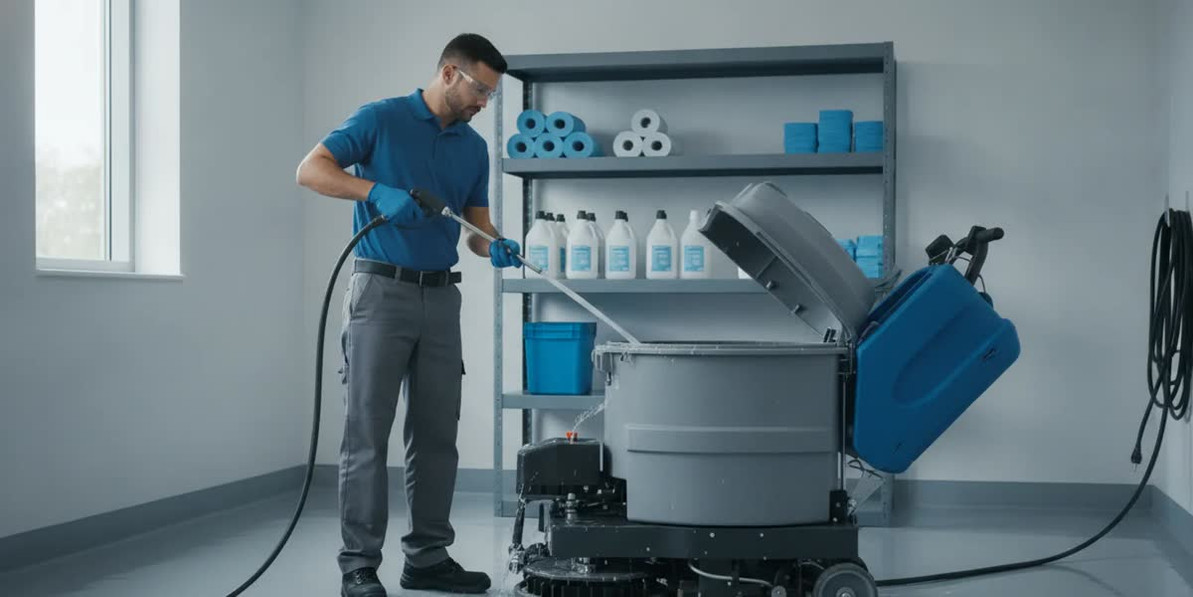
How should facilities maintain janitorial equipment between floor scrubber service cycles?
A commercial floor scrubber can only do its job consistently when the team gives it routine attention between service visits. A practical janitorial equipment maintenance routine starts at the end of each shift: empty and rinse the tanks, clean the parts that contact the floor, inspect for wear or leaks, and leave the machine ready for its next use. The exact procedure depends on the machine, so use its manual for model-specific instructions and service intervals.
This guide focuses on everyday operator care and basic inspection, not repairs or a substitute for scheduled service. It covers daily cleanup, recovery tanks, brushes and pads, inspection points, storage, and how to plan service before a small issue interrupts a shift.
What should a between-service routine accomplish?
Between-service care has three practical aims: remove residue, spot developing problems, and keep the scrubber in a known condition for the next operator. A tank left with dirty solution can develop odor or residue. A worn or incorrectly installed floor-contact component can affect cleaning results or put extra strain on the equipment. A damaged cord, hose, squeegee, or wheel may also need attention before the next shift.
Keep the routine focused on tasks operators are authorized and trained to perform. Do not treat a daily checklist as permission to open electrical or mechanical components. If the manual reserves an inspection or adjustment for qualified service personnel, follow that direction. When instructions differ between models, the machine's manual takes precedence over a generic checklist.
Build the routine into the handoff between shifts. The person who used the machine should report unusual noise, vibration, leakage, poor pickup, a warning indicator, or a change in operating behavior. A short written note is more useful than assuming the next operator will notice the same condition.
How should operators close out a shift?
Start with the manufacturer's shutdown procedure. Park the scrubber in its designated area, lower or raise components as instructed, and turn it off using the specified controls. If the machine uses a key, charger, or removable power source, handle it only as the manual directs. Do not improvise a shutdown or attempt maintenance while moving parts are active.
Then follow a consistent sequence so no major task is missed:
- Record any fault indicator, unusual sound, leak, or performance change before cleaning.
- Empty solution and recovery tanks in accordance with the equipment instructions and the site's disposal procedures.
- Rinse and wipe tanks and accessible tank components as directed. Remove visible debris without using tools or chemicals that could damage a surface.
- Clean the brush, pad, squeegee, and other floor-contact parts using the approved method for that machine.
- Check visible hoses, wheels, covers, and fittings for obvious damage, loose parts, or trapped debris.
- Wipe accessible exterior surfaces, dry or leave components positioned as the manual specifies, and store the machine in its assigned location.
- Log the completed care and report anything that needs follow-up.
This order helps separate cleaning from inspection. It also makes missed steps easier to identify when several people share the equipment. Avoid spraying controls or electrical areas unless the manufacturer specifically allows that cleaning method.
Why do the recovery and solution tanks need attention?
The tanks are central to a scrubber's daily care because they hold the liquids and soil collected during use. At shift end, empty them as instructed rather than leaving a full recovery tank or unused solution sitting until the next shift. Rinsing can remove loose residue, while a visual check can reveal buildup, debris, a damaged cap, or a seal that does not appear seated correctly.
Use the procedure and cleaning agents approved in the machine documentation. Avoid mixing chemicals or using a strong cleaner simply because it is available in the custodial closet. A product that is suitable for one task may not be appropriate for tank materials, seals, or the scrubber's fluid path. Never mix cleaning products; follow the product label and the facility's chemical-handling procedures.
After rinsing, inspect the accessible tank area for remaining debris. Check that caps, covers, and removable components are back in place as directed. If a tank still smells, has persistent buildup, or appears cracked, swollen, or otherwise damaged, note the condition and ask the supervisor or service provider what to do. Do not conceal a possible leak by simply wiping the area and returning the machine to service.
Facilities can make this step easier by setting a clear location and process for tank emptying, rinsing, and drying. Keep only the supplies approved for the equipment at that station, and train operators on where liquid may be discharged. Local procedures and equipment instructions determine the appropriate disposal method; do not assume all recovered liquid can go into the same drain.
How should brushes and pads be checked?
Brushes and pads are wear items, and their condition should be checked at a frequency suited to the machine, floor, workload, and manufacturer guidance. At the end of use, remove debris and rinse or clean them using the specified method. Look for uneven wear, embedded material, tears, deformation, or a part that no longer sits securely. A part that looks damaged or does not fit correctly should not be forced back onto the machine.
Do not use a single visual rule for every brush or pad. The permitted wear limit, installation method, and replacement interval vary. Record the type of component, when it was changed, and any observed condition. That history helps a supervisor distinguish normal consumption from a recurring issue, such as damage after a change in floor conditions or a change in how the machine is operated.
Keep replacement parts organized and identified by the machine or task they fit. Verify the component type and compatibility against the equipment documentation before ordering or installing it. A generic description such as “scrubber pad” is not enough to establish fit. If a worker cannot confirm the correct part, pause and ask the supervisor or supplier to verify the model information.
For related cleaning and maintenance consumables, buyers can review the Chix product catalog and TOLCO product catalog as part of broader supply planning. Check product details and compatibility for the particular task; these catalog links are not a substitute for verifying a scrubber component against its manual.
What should operators inspect before putting the scrubber away?
A quick visual inspection is a chance to find a condition that should be reported. It is not a full technical service. Include the visible parts operators can safely access, and do not remove guards, covers, or panels unless their role and the manual allow it.
- Hoses and connections: Look for visible cracks, kinks, loose connections, or signs of leakage.
- Squeegee and floor-contact parts: Check for accumulated debris, uneven wear, damage, or a component that appears out of position.
- Brush or pad assembly: Confirm it is clean and appears properly installed, following the machine's instructions.
- Wheels and exterior: Look for trapped material, damage, or anything that could interfere with movement.
- Controls and indicators: Note a warning light, unresponsive control, or other unexpected indication. Do not bypass it.
- Power and charging equipment: Inspect only accessible areas for visible damage, and follow model-specific battery and charging instructions.
- Leaks or residue: Check the floor and machine exterior after cleanup. A repeated wet spot or recurring residue needs investigation.
Operators should report a problem promptly and identify the machine, date, shift, and symptoms. A useful report says what happened and when: for example, “recovery tank did not appear to empty fully after the afternoon shift” is more actionable than “machine is acting up.” Supervisors can then decide whether it is safe to continue using the scrubber or whether it should be tagged out under facility procedure and assessed by qualified personnel.
How do storage and charging affect readiness?
Choose a storage space that protects the equipment from avoidable damage and allows the next operator to find it. Park it where it will not block exits, walkways, or access to other equipment. Keep hoses and removable parts arranged as instructed rather than pinched under a wheel or left where they can be tripped over. Follow the manual for the correct position of the scrub deck, squeegee, and other moving components while stored.
Battery and charging instructions are model-specific. Use the charger and charging procedure specified for the machine, and place it only in the designated charging area. Do not assume all batteries need the same charging schedule, ventilation, connection sequence, or handling. Report visible damage to a battery, charger, plug, or cable; do not use damaged charging equipment or attempt an unauthorized repair.
Include storage conditions in the handoff checklist. Note whether the machine is clean, whether it is ready for its next planned use, and whether it needs a charge according to the manual. If the facility has more than one scrubber, identify each unit clearly in the log so maintenance notes and service records do not get assigned to the wrong machine.
Which maintenance tasks belong to operators and which need service?
The division depends on the scrubber and the facility's training rules. A simple way to prevent overreach is to distinguish routine care from adjustment or repair. Operators can usually be assigned visible cleanup and reporting tasks only when the manual and the facility authorize them. Mechanical, electrical, battery-system, or internal component work should be referred to qualified service personnel when required by the documentation or site policy.
| Task type | Typical examples | Who should handle it? | When to escalate |
|---|---|---|---|
| Routine closeout | Emptying and rinsing tanks, removing visible debris, wiping accessible surfaces | Trained operator, following the model manual and site procedure | If the procedure is unclear, a part is damaged, or a leak persists |
| Visual check and reporting | Noting worn floor-contact parts, visible hose damage, warning indicators, unusual sound | Operator reports; supervisor records and assesses next steps | Promptly when safety, function, or continued operation is in question |
| Routine scheduled service | Checks and adjustments specified by the manufacturer at defined service intervals | Qualified service personnel, as the machine documentation requires | At the stated interval or earlier if symptoms call for attention |
| Repair or internal work | Electrical, drive, battery-system, internal fluid, or guarded-component repair | Authorized or qualified technician under applicable procedures | Do not attempt when the operator is not authorized or trained |
This table is a planning framework, not a universal assignment of tasks. Confirm the actual boundaries with the manual, service agreement if applicable, and workplace procedures. When in doubt, stop and ask the designated supervisor rather than attempting a repair based on a general online checklist.
How should care change with workload and floor conditions?
A fixed closeout should be the minimum routine, not a reason to ignore conditions during a shift. Heavy soil, frequent solution changes, long operating periods, or debris that collects around floor-contact parts can call for an additional check. The manual and the site's procedures define which checks are permitted and when they should happen. Operators should not extend a shift or continue operating through a warning simply because the scheduled closeout has not arrived.
When a scrubber is shared across different areas, note the work conditions as well as the machine symptoms. Record the location, approximate time, floor condition, and what the operator observed. This information can help a supervisor see whether a recurring concern is connected to one route, a particular shift, or the equipment itself. It is not a diagnosis; it helps direct the next inspection or service conversation.
Seasonal changes and temporary projects can alter the amount and type of soil brought into a building. If cleaning results or equipment observations change, review the route, operator briefing, and closeout process. Do not respond by changing chemical concentration, using a different pad, or modifying the scrubber without checking the product directions, machine instructions, and facility approval process. Keep any approved change documented so later shifts know which procedure to follow.
For a fleet, compare unit logs rather than assuming every machine needs identical attention. A scrubber with more operating hours or a different assignment may need a different service plan under manufacturer guidance. Track each unit separately, and ask qualified service personnel to advise when the recorded use or symptoms suggest a change to the planned interval.
How can supervisors make the routine repeatable?
Keep a checklist short enough for operators to complete consistently, but specific enough to show what “clean and ready” means. Identify the scrubber by asset number or another clear label. Include checkboxes for the tanks, brush or pad, squeegee, visible inspection, storage, and issue reporting. Add a place to record initials, date, and shift.
Post the steps near the storage or cleanup area, but refer operators to the equipment manual for detailed instructions. Provide training before assigning the routine and refresh it when the equipment, chemical procedure, or staffing changes. If crews include multiple shifts or languages, make the instructions easy for each assigned operator to understand and demonstrate the process in person.
Review completed logs rather than filing them without inspection. Repeated missed steps may indicate that the procedure is confusing, the cleanup station is poorly arranged, or the allotted time is unrealistic. A recurring issue may also signal that parts or service attention are needed. Discuss the pattern with operators and supervisors before changing the procedure.
How should facilities plan service before a breakdown?
Use the manufacturer's recommended service intervals as the starting point. Track operating hours or other measures if the model documentation calls for them, and keep a record of visits, replaced components, recurring symptoms, and corrective work. A service calendar should show which machine is due, who is responsible for arranging the visit, and how the facility will cover cleaning tasks if the unit is unavailable.
Do not wait for a calendar date if the scrubber develops a warning, repeated leak, change in pickup, unusual vibration, or another symptom that affects safe operation. Escalate the issue through the facility's process and let qualified personnel decide whether the equipment should remain in use. Likewise, do not invent a service interval based on another model's schedule. The manual and qualified service advice are the right references for that machine.
Keep operating supplies and maintenance records connected without confusing them. The janitorial catalog hub can help purchasing teams review the broader janitorial supplies range; the machine manual remains the authority for compatible parts and maintenance procedures. Buyers may also review Zep products, Diversey products, and Maintex products for catalog information relevant to their purchasing needs, then verify each item's intended use and compatibility before use.
For workplace safety requirements that apply to a particular task, consult the relevant official resources and your organization's safety procedures. The Occupational Safety and Health Administration (OSHA) is a primary source for workplace safety information. This general maintenance guide does not replace task-specific training, equipment instructions, product labels, or applicable safety requirements.
What should a scrubber maintenance log include?
A log is useful when it captures information that helps the next person act. Keep the required fields consistent across shifts and machines. A paper sheet, digital form, or existing work-order system can all work if operators can access it and supervisors review it.
- Machine identifier and location.
- Date, shift, operator, and approximate use where the manual requires it.
- Completion of tank, brush or pad, squeegee, and storage steps.
- Any visible wear, leak, damage, warning, or unusual behavior.
- Who was notified, when, and whether the machine was held from use under site procedure.
- Service date, findings, and follow-up actions when a technician assesses the unit.
Do not use checkmarks to imply that a condition was repaired. A clear “reported, awaiting assessment” entry is better than a blank or a false assurance. Close the loop by recording who resolved the issue and whether the machine was returned to service.
What common maintenance mistakes should teams avoid?
Several preventable habits make care less reliable. Leaving tanks full or dirty moves cleanup to the next shift and can hide a developing problem. Reinstalling a visibly damaged component without reporting it may turn an obvious issue into a service interruption. Spraying water near controls, using unapproved chemicals, or attempting a repair outside the operator's training can create new risks.
Another mistake is relying on memory. Shared equipment changes hands, and a verbal handoff can be missed during a busy shift. A written checklist and concise condition note help people distinguish routine completion from unresolved faults. Likewise, avoid copying service intervals from a different scrubber; use the instructions for the actual model.
Finally, do not treat a clean exterior as proof that the machine is ready. Readiness also depends on the tanks, floor-contact parts, visible condition, storage, and required charging or service status. A consistent closeout is more dependable than a quick wipe-down.
Explore the janitorial supplies catalog
Frequently Asked Questions
Should operators rinse the recovery tank after every shift?
Follow the machine manual and facility procedure. Many daily closeout routines include emptying and rinsing tanks, but the exact steps and handling of recovered liquid must follow the equipment instructions and site rules.
Can a janitorial team use any cleaner to wash the scrubber tank?
No. Use only a method and products permitted by the machine documentation and applicable product directions. Do not mix cleaning products, and ask a supervisor if the suitable method is uncertain.
When should a scrubber be taken out of use?
Follow the facility's stop-use and reporting process when there is a condition that could affect safe operation or function, such as damage, a persistent leak, an unresolved warning, or an unusual change in operation. A supervisor or qualified service professional should determine whether it can return to use.
How often does a commercial floor scrubber need professional service?
There is no single interval for every model and duty cycle. Use the schedule in the machine documentation and ask qualified service personnel about the facility's operating conditions and service needs.
A simple end-of-shift routine, clear reporting, and service records help facilities keep scrubbers ready without asking operators to perform repairs beyond their training. Use the manual for model-specific details, and address unusual conditions before they become the next shift's surprise.
Recent Posts
-

How should facilities maintain janitorial equipment between floor scrubber service cycles?
A commercial floor scrubber can only do its job consistently when the team gives it routine attentio …Nov 12th 2026 -

How to Buy Wholesale Janitorial Supplies: A Complete Guide for Commercial Buyers
To buy wholesale janitorial supplies well, commercial buyers should match products to actual usage, …Nov 11th 2026 -

Wholesale Food Storage Bags Buying Guide
Food storage bags are a small line item until an operation buys them every week. The right purchasin …Nov 11th 2026