
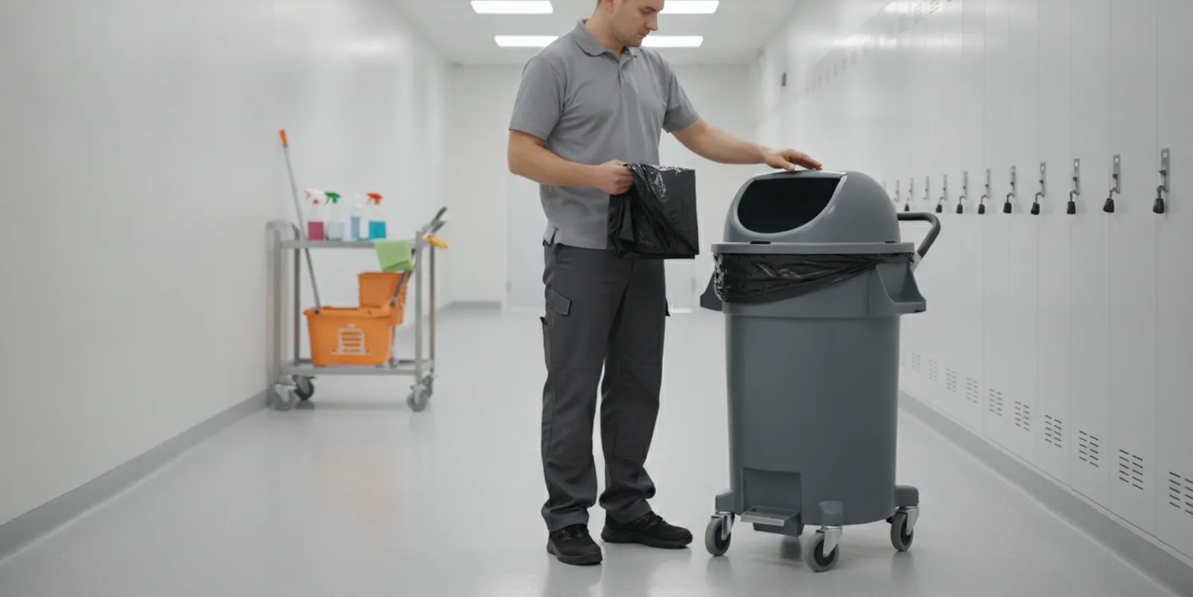
Commercial Trash Can Liners Sizing Guide: Buying by the Case, Mil Thickness
A commercial trash can liners sizing guide should start with the container, not the printed gallon capacity. Two cans with the same capacity can have different openings, heights, and shapes, so a liner that fits one may slip into another or leave too much excess material. Measure the cans in your facility, then match bag dimensions, material, seal, and case quantity to the waste stream. This article supports broader foodservice disposables and commercial kitchen supply buying guidance, and the steps below help turn measurements into a repeatable purchase specification.
Browse facility supply options
Can Liner Sizing Chart: How to Match Bag Dimensions to Container Gallon Capacity
Use a container's gallon rating as a quick reference, not as the final size specification. The most useful measurements are the opening width, the container height, and the distance from the rim to the bottom. If the can is round, measure its diameter across the opening. For a square or rectangular container, measure both opening dimensions. Measure the can itself, not its lid or an outer recycling frame.
For a round can, estimate the liner's flat width from the opening circumference: divide the circumference by two, then add enough width for the liner to pass over the rim. Since circumference is about 3.14 times the diameter, the starting calculation is (diameter × 3.14) ÷ 2, plus overhang. For a rectangular can, a practical starting point is half the perimeter of the opening, plus overhang. In both cases, treat the calculation as a starting estimate. Liner shape, gussets, material stretch, rim design, and how full the bag gets can change the fit.
For length, add the container height to the amount needed to fold over the rim and to a little slack at the bottom. A bag that is too short can pull off the rim as it fills. An excessively long bag can bunch inside the can, waste material, or create a trip and cleanup issue if it spills over the floor. Check the fit with a sample before standardizing a new size across a site.
| Container capacity (approx.) | Common liner size starting range | Fit check |
|---|---|---|
| Small restroom or desk can, about 7–10 gal | About 24–27 in. wide × 23–30 in. long | Confirm the bag clears the opening and folds over the rim. |
| Office or small break-room can, about 12–16 gal | About 24–30 in. wide × 27–33 in. long | Check height and whether the can is round or rectangular. |
| Mid-size facility can, about 20–30 gal | About 30–33 in. wide × 36–40 in. long | Test with the actual waste load; capacity labels vary by can shape. |
| Large commercial can, about 32–44 gal | About 33–40 in. wide × 39–46 in. long | Verify opening coverage, rim overhang, and loaded-bag handling. |
| Large barrel or wheeled container, about 45–60 gal | Often 38–43 in. wide × 46–58 in. long | Measure the opening and height directly; do not rely on gallons alone. |
These ranges are common starting points, not a universal sizing standard or a promise of fit. A taper, thick rim, attached lid, square opening, or unusually tall container can call for a different dimension. Record the can model or location alongside the measured dimensions and trial size. When a site has several can types, keep separate specifications instead of ordering one size based only on the largest gallon number.
Mil Thickness Explained: Light-Duty vs. Heavy-Duty vs. Extra-Heavy for Commercial Use
A mil is one-thousandth of an inch. It describes film thickness, but thickness alone does not tell you exactly how a liner will perform. Material type, manufacturing, bag dimensions, seams, and the shape of the waste all affect puncture and tear risk. Compare liners under the conditions in which they will actually be used, rather than selecting a thickness based only on a broad label such as “heavy duty.”
Light-duty liners are commonly considered for lighter, smoother waste such as paper towels, office paper, and other low-risk dry waste. A thinner bag may be a sensible option when bags are changed before they become heavy and the contents have few sharp edges. The choice should still account for how employees lift and remove full bags. A liner that saves material but tears during routine handling can create extra labor and cleanup.
For mixed everyday waste, a middle thickness may be a better starting point. Think about the frequency of sharp packaging, food scraps, damp material, and the distance a full bag must be carried. Heavy or wet loads place more stress on a liner than light paper, even when both fit the same container. If a bag is routinely leaking, tearing at the bottom, or splitting while lifted, investigate the cause before simply increasing thickness. The bag may be undersized, overloaded, or exposed to sharp waste that needs a different disposal approach.
Heavier-duty liners are generally worth evaluating for demanding loads, including bulky refuse, rough packaging, or heavier maintenance waste. Extra material may be useful where punctures and failures are frequent, but it can also increase material use and cost. Test the lightest specification that reliably handles the actual waste, and set a clear fill level so staff do not overfill bags. Do not treat a thickness label as a substitute for safe lifting practices or waste-handling procedures.
A simple trial can make the choice more consistent:
- Choose a representative container and typical work area.
- Record the waste type, whether it is wet, and any recurring sharp or bulky items.
- Fit a sample liner and observe whether it stays on the rim during use.
- Check the liner at the normal change point for leaks, punctures, and tearing during removal.
- Adjust one factor at a time, such as dimensions or thickness, and document the result.
For multi-site purchasing, a brief written specification prevents teams from interpreting “heavy duty” differently. List dimensions, thickness, material, seal style, color if required for site procedures, case quantity, and approved use. Keep the selection tied to observed conditions, not an unsupported claim that a particular thickness is suitable for every facility.
High-Density vs. Low-Density Polyethylene: When Each Material Is the Right Choice
High-density polyethylene (often abbreviated HDPE) and low-density polyethylene (LDPE) are common liner materials. As a general purchasing distinction, HDPE liners are often thinner and can be appropriate for lighter, relatively uniform waste. LDPE liners are often selected when buyers want a more flexible film for mixed or bulky waste. These are general tendencies, not guarantees: construction and product specifications differ, so compare the stated dimensions and thickness and test the liner with your own waste.
Consider HDPE as a candidate for routine dry waste with few sharp edges, such as paper from offices or lightweight restroom waste. It may offer a practical balance when bags are changed frequently and loads are modest. For example, if an office can contains mostly paper towels and light packaging, evaluate a properly sized HDPE liner and confirm it remains intact when staff tie or lift it. A thinner bag can still fail if the opening is too small or the container is overfilled.
Consider LDPE when the waste is more varied, bulky, or likely to stress the film during removal. Flexible material can be useful for mixed refuse, but the right selection still depends on the thickness and exact product construction. If waste includes food remnants or damp material, check local handling rules and use a bag intended for the job; do not assume a material name alone confirms leak protection. Wet waste should be handled and removed in a way that limits spills and exposure.
The Green Seal GS-60 standard for plastic trash bags and can liners addresses environmental, health, and social requirements for household and industrial products. It is a standard to consult when environmental criteria are part of a purchasing specification. Its existence does not establish that every liner meets the standard, so verify any claim against the specific product documentation before relying on it.
Material should be one line in a comparison, not the entire decision. Compare dimensions, thickness, expected load, seal, and the frequency of bag failure. Where a building has separate waste streams, use a distinct specification for each rather than assuming one material works equally well in restrooms, offices, kitchens, and loading areas.
Star-Seal vs. Flat-Seal vs. Tie-Top: Which Closure Works Best by Application
The bottom seal affects how a liner sits and how its contents are contained. A star seal gathers the bottom film into a star-like pattern. A flat seal is a straight seam across the bottom. A tie-top is a closure feature at the bag opening, rather than a bottom-seal style. Product construction varies, so check the listing or packaging to confirm which feature a specific liner has.
- Star seal: The gathered bottom is designed to fit around the base of a round container. It can be a useful option when a close bottom fit matters, but confirm the dimensions and fit in the actual can.
- Flat seal: The straight bottom seam is a common construction. Evaluate it against the type and weight of waste, and inspect sample bags for leakage or seam failure in normal use.
- Tie-top: Integral ties or tabs can make it easier to close a bag without a separate twist tie. Consider whether staff can close it securely and whether the tie feature suits the way full bags are handled.
For foodservice and break-room waste, the contents may include damp or irregular items, so a trial should focus on bottom integrity, closure, and safe removal. In a restroom, small liners may be changed often and easy closure can help simplify the routine. In an office, low-weight paper waste may make a basic seal adequate. These are selection scenarios, not rules: container shape, bag size, loading practices, and product design all matter.
When evaluating a seal, do not fill a bag beyond the site's safe handling limit to test its strength. Use a typical load, check for leakage or seam separation, and confirm that the closed bag can be removed without dragging or tearing. If the liner fails at the bottom, document the waste and the fill level, then compare an alternate seal or construction in a controlled trial.
Ordering Commercial Can Liners by the Case: Calculating Volume for Multi-Facility Operations
Case buying can reduce the frequency of reorders, but only when the case count matches actual usage and storage capacity. Start with a short consumption audit. For each liner size, count the containers served, estimate how often each is emptied, and note operating days. If a site has 18 containers that each use one liner per day over 5 days per week, that is about 90 liners per week before allowing for weekends, extra changes, or unusual volume. Use actual usage records where possible instead of treating the estimate as a fixed forecast.
Then compare weekly use with the number of liners in a case. Divide the case count by weekly use to estimate how many weeks a case may last. For example, a 200-count case used at roughly 90 liners per week covers a little over two weeks at that rate. This is a planning estimate, not a guarantee: seasonal activity, occupancy, events, and changes in collection frequency can move demand. Recalculate when a site adds containers or changes its waste schedule.
For multiple locations, keep a separate line for each size and destination. A simple purchase worksheet can include:
- Facility and department or area.
- Container capacity and measured opening and height.
- Approved liner dimensions, material, thickness, and closure.
- Average liners used per week and case pack.
- Available storage space, on-hand cases, and reorder trigger.
- Any local waste-separation or color-coding requirement.
A useful audit separates routine use from exceptions. For one week, note each restock by location and liner size, including additional changes after a spill, event, or unusually busy shift. At the end of the week, compare the count with the number of cans and the planned collection schedule. A large gap may reveal that a high-traffic station is emptied more often than expected, that staff are using the wrong size, or that supplies are being moved between departments without being recorded.
Use those findings to create a reorder point rather than placing the same case quantity for every area. For example, a back-of-house kitchen station with frequent changes may need a shorter review interval than a low-use administrative office. Determine the average weekly draw for each specification, note how much stock is on hand, and select a trigger that leaves time for replenishment. Revisit the trigger after a schedule change or a noticeable shift in occupancy. If consumption is irregular, maintain a modest buffer based on the observed busy periods instead of treating a single quiet week as typical.
Before expanding a newly selected liner to every location, run a controlled rollout. Start with one representative department, make sure staff know the approved dimensions and fill limit, and review failures or leftover stock after a few normal ordering cycles. If the test shows a fit problem, revise the specification and label it clearly before purchasing the larger volume. This reduces the chance of tying up shelf space in a size that does not match the containers.
Set a reorder point using average usage and the time it takes to receive the order, with a reasonable buffer for demand changes. Avoid buying a very large quantity of a newly selected size before a fit and performance trial. Keep the trial result with the specification so future purchasers can reorder the tested configuration rather than relying on an informal description.
Consolidating compatible supply orders can make inventory planning easier. A facility may review liners alongside paper products, hand-care supplies, and cleaning products on its regular buying cycle. For example, teams sourcing restroom and facility items can also review Papernet products, Kleenex products, Betco products, Suma products, or Impact products as appropriate to their requirements. Check the specific item details and your site's needs before adding anything to a purchase plan.
Explore facility supply options
Frequently Asked Questions
Can I choose a liner by gallon capacity alone?
No. Gallon capacity is a useful first filter, but container openings, heights, and shapes differ. Measure the opening and height, then test the liner in the actual container before ordering a new size by the case.
Does a thicker liner always prevent tears?
No. Thickness is only one factor. Material, dimensions, seams, waste shape, and overfilling also affect failures. Identify where and how a liner tears, then test a suitable change with a representative load.
How many cases should a facility order?
Estimate average weekly use by size, compare it with each case count, and account for storage space and replenishment time. Begin with recorded consumption where available, and review the estimate when usage patterns change.
Should every department use the same liner?
Not necessarily. A restroom, office, kitchen, and loading area can have different container dimensions and waste. Standardize within areas that share the same needs, but keep separate specifications where size or waste conditions differ.
Make the Liner Specification Repeatable
A reliable commercial can liner order starts with measurements and observed use. Match bag dimensions to the opening and height, test material and thickness against the waste stream, confirm the closure suits how staff remove bags, and forecast cases from real consumption. Record the approved specification by location so the next order fits the containers and work routine.
Recent Posts
-

Commercial Trash Can Liners Sizing Guide: Buying by the Case, Mil Thickness
A commercial trash can liners sizing guide should start with the container, not the printed gallon c …Oct 15th 2026 -

Commercial Floor Care System Guide: Stripper to Restorer
A commercial floor care system is a planned combination of cleaning chemistry, floor pads, equipmen …Oct 14th 2026 -

Bulk Hand Soap for Commercial Restrooms: How to Choose Between Foam, Liquid, and Lotion
Choosing bulk hand soap for commercial restrooms is not just a question of scent or price. Facility …Oct 9th 2026