
How should facility managers build a seasonal maintenance supply checklist?
Facility maintenance supplies are easier to manage when the buying plan follows the work a building actually performs. A seasonal checklist gives facilities managers, janitorial professionals, and wholesale buyers a repeatable way to review cleaning, restroom, floor-care, safety, foodservice, and outdoor needs before demand changes. The goal is not to order everything in large quantities. It is to identify the right items, verify specifications, estimate use, and make each purchase fit the site's tasks and storage limits.
Browse facility maintenance supplies
What should a seasonal maintenance supply checklist cover?
Begin with a shared checklist structure, then adapt the contents to the building. An office, school, restaurant, warehouse, healthcare setting, and cleaning contractor may have different operating hours, surfaces, traffic patterns, and supply controls. A generic list is a prompt, not a final order. Build the actual list from observed work, purchasing records, product instructions, and the people responsible for each task.
Useful categories include routine cleaning products and tools; floor-care items matched to the surface and method; restroom and hand-hygiene supplies such as soap, sanitizer, towels, tissue, dispensers, and compatible refills; workplace safety supplies required by the organization's procedures; foodservice disposables and cleaning items for kitchens or breakrooms; waste and entry-area supplies; and project stock for planned renovations, deep cleaning, moves, events, or shutdowns.
Keep each line specific enough to support a purchase. Instead of entering âfloor cleaner,â record the task, surface, product name or required attributes, package size, storage location, and person who verifies selection. Do not assume products with similar names are interchangeable. Product labels, safety procedures, equipment instructions, and site rules remain the source of truth for use.
How do you identify seasonal changes at your site?
Seasonal planning starts with the building calendar rather than a supplier catalog. Review occupancy, operating hours, weather exposure, school or event schedules, planned closures, construction, and changes in customer traffic. A restaurant may need a different review from a warehouse, while a multi-tenant office may have separate requirements for common areas and tenant spaces.
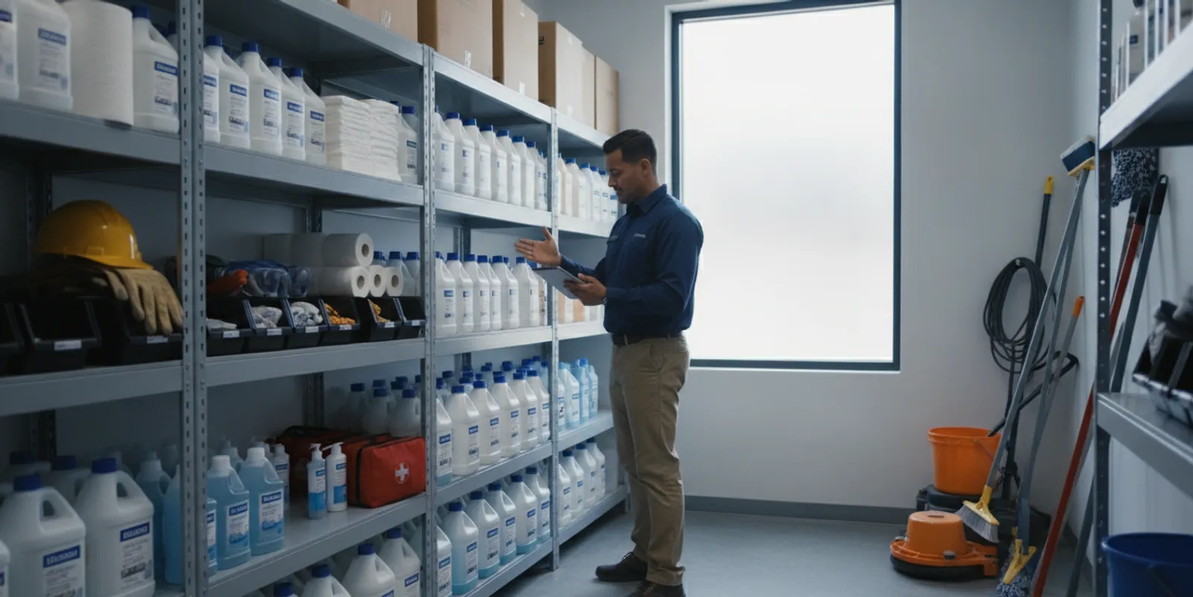
Walk the site with the people who perform, supervise, and replenish the work. Inspect janitor closets, restrooms, dispensers, entrances, loading areas, floor-care equipment locations, kitchens, breakrooms, and central storage. Ask what changed during the previous season and what caused an urgent order. Also ask which items were purchased but remained unused. Record observations by area instead of relying on a single general impression.
Use these prompts during the walk-through: Which tasks will occur more often? Which areas may see a change in traffic, soil, moisture, dust, or service frequency? Are events, shutdowns, renovations, or move-ins scheduled? Have dispensers, equipment, surfaces, or procedures changed? Which items have long lead times, limited storage life, or unusual case quantities? Are current products and PPE still suitable under the site's procedures?
Date every observation and assign an owner. Separate confirmed needs from estimates. If a task, product, or quantity is uncertain, name the person responsible for verifying it and set a date. This prevents an assumption from turning into an oversized purchase or an unapproved substitution. A short note such as âconfirm refill format with restroom lead before October orderâ is more useful than a vague reminder to check supplies.
How should you organize the checklist for buyers?
A useful checklist connects each supply to a task. Organize it by area, category, or work process, but use the same fields for every line. Consistency matters when several departments count stock or when a buyer compares orders across seasons.
| Checklist field | What to record | Why it matters |
|---|---|---|
| Task and area | Where the item is used and the work it supports | Connects the purchase to an operating need |
| Specification | Product name or required attributes, surface, format, and package size | Reduces mistaken substitutions |
| Usage | Recent consumption, expected seasonal use, and unit of measure | Creates a basis for quantity planning |
| Stock position | Usable stock, opened packages, damaged goods, and reserve | Shows what is truly available |
| Supply timing | Typical lead time, next review, and order frequency | Helps avoid last-minute purchasing |
| Storage and ownership | Location, capacity, access limits, and responsible person | Keeps inventory visible and accountable |
Use one unit of measure throughout each item record. If one person counts bottles and another counts cases, the resulting data will not support a dependable order. Record whether stock is sealed, open, damaged, or reserved for a project. Usable inventory is not necessarily the quantity physically present. Establish a simple definition with the team: for example, count opened stock only when its contents and condition are known and it remains suitable for the intended task.
For a broader maintenance perspective, the International Facility Management Association maintenance checklist article discusses checklist considerations such as clearing debris, wiping surfaces, and checking components. Use general guidance alongside equipment instructions and site procedures. It does not replace a product label, service manual, hazard assessment, or qualified maintenance decision.
How do you estimate quantities without overordering?
Use recent consumption as a starting point. Define the period under review, such as the previous month, quarter, or comparable season. Then account for expected changes in occupancy, task frequency, operating hours, and delivery timing. A simple planning calculation is:
Expected use during the replenishment period + reasonable reserve - usable stock on hand = starting order estimate.
The estimate still needs judgment. Check it against case packs, storage capacity, product directions, and the time before the next review. A reserve may be appropriate for an essential item with uncertain delivery timing, but a large reserve is not automatically sensible for a project-specific product or something likely to sit unused.
For example, suppose a workplace used 18 cases of towels during a comparable three-month period. A schedule change suggests expected use of 20 cases next period. The buyer has 6 usable cases and wants a reserve of 3. The starting estimate is 17 cases. Before ordering, the buyer checks pack size, available shelf space, delivery timing, and whether the reserve is already included in the site's normal count. If one department has unrecorded stock, the calculation should be updated rather than padded with an additional blanket buffer.
When history is incomplete, use a short measurement period instead of pretending the estimate is precise. Record the starting stock, deliveries, and ending stock for a defined interval. Ask the team to note unusual events, such as a large gathering or a temporary closure, so those conditions are not treated as normal demand. Mark the estimate provisional and schedule an earlier count to test it.
Review quantities after the season. Compare the estimate with receipts, stock counts, and actual use. Note whether a case pack was too large, an item was unavailable, an approved substitute was used, or demand changed unexpectedly. These notes improve the next cycle and make purchasing less dependent on memory.
How should floor-care and equipment supplies be planned?
Give floor care its own section instead of hiding it in a general cleaning list. Record floor type, area, task, frequency, equipment, product specification, and responsible person. Distinguish daily upkeep from scheduled maintenance and restorative work. This keeps a routine supply order separate from a project estimate and clarifies who approves a change in method.
Verify floor-care products against the relevant surface and equipment instructions. Do not change dilution directions, combine products, or assume compatibility from a broad product category. If a task involves an unfamiliar surface, new machine, or unusual finish, pause the order until the responsible person confirms the requirement.
Equipment records should identify the machine or area involved. Track cleaning accessories and consumables separately from repairs, inspections, and service work. A supply checklist can flag a maintenance need, but a consumable does not replace an inspection or qualified repair. The janitorial and facility supplies catalog is a starting point for relevant categories; the equipment manual remains the basis for operation.
A practical floor-care review can follow four steps. First, list each floor area and surface. Second, confirm the routine task and equipment used there. Third, check the present product and accessory specification against the relevant instructions. Fourth, record quantities separately for routine work and any scheduled project. For example, a planned deep-cleaning project should not inflate the recurring monthly quantity unless the team expects that work to repeat.
What belongs in a restroom and hand-hygiene review?
Restroom and hand-hygiene supplies are often consumed steadily, but demand can shift with occupancy, hours, events, and dispenser configuration. Track soap, sanitizer, towels, tissue, and dispenser refills as separate items when their package sizes or replenishment patterns differ. Include dispenser type or refill format where compatibility matters.
Inspect dispensers during regular rounds. Count storage stock separately from what is loaded in dispensers, and note damaged or empty units. A low stock count may point to a purchasing issue, but it may also indicate a dispenser problem or inconsistent replenishment. Record the location and unit, then assign follow-up instead of silently changing the order quantity.
Priority hygiene categories deserve clear ownership. Buyers can review skin-care and hand-hygiene supplies for relevant catalog categories, and consult SC Johnson Professional products when the established specification calls for that line. Confirm the exact item, refill format, directions, and suitability before ordering.
Set a minimum quantity for high-use items based on observed consumption and delivery timing. Revisit it after a change in occupancy, facility hours, dispenser type, supplier pack size, or service schedule. If a restroom has sharply different traffic from others, track it separately for a few review cycles before deciding whether to maintain a separate threshold. The objective is dependable availability without arbitrary surplus.
How should safety and seasonal outdoor needs be handled?
List safety supplies by task and by the procedures your organization has adopted. Identify who confirms selection, condition, replacement, and training requirements. The checklist should direct employees to applicable workplace procedures and product information. It should not replace training, a hazard assessment, or professional advice.
Seasonal outdoor needs should reflect actual site conditions. An entrance exposed to rain or snow may require a different review from an interior facility with little outdoor traffic. Record the area, expected condition, task, timing, estimated quantity, storage location, and owner. Include supplies for tracked-in moisture, dust, debris, or waste only when those conditions exist at the site.
Use a condition-based review rather than a generic âwinter stockâ list. Walk the entrances before the weather changes, inspect where water or debris collects, and ask staff what tasks become more frequent. Check whether storage is available near the point of use and whether replenishment can be assigned to a specific shift. If the building has several entrances, record their differences rather than multiplying one estimate across all doors.
Keep chemical claims narrow and product-specific. Do not infer pathogen coverage, environmental status, or performance from a broad category name or marketing description. Check the product label and relevant site rules before use. If the intended application is unclear, have the responsible person verify it before purchasing or distributing the product.
How can case packs and storage affect the order?
Case purchasing can reduce handling frequency, but a case pack does not automatically make a larger order appropriate. Compare the required quantity with the available pack size, shelf space, access controls, and expected use period. If the estimate falls between pack sizes, decide whether the surplus can be used within a reasonable period and stored correctly.
For instance, if the estimate is slightly above one case but below two, compare the likely time to use the second case with the next replenishment date. If the item is stable under the site's storage conditions and the next delivery is uncertain, a second case may be reasonable. If space is restricted or the item is used only for a one-time project, splitting the requirement or arranging a later review may be more appropriate. Document the reason so the next buyer understands the decision.
Plan storage by category and task. Keep labels visible, leave access for counting, and separate routine stock from project-specific stock. Record the location in the checklist so another buyer does not reorder an item that is present but hard to find. Use a consistent approach for opened packages and damaged goods. Do not count unusable stock as available simply because it remains on the shelf.
Buyers comparing categories can use the SC Johnson product destination or the Sani Professional product destination as internal starting points when those lines match an established need. The checklist should still identify the exact product and quantity rather than treating a brand page as a substitute for specification review.
What controls help prevent stockouts and excess stock?
Use a review rhythm that reflects consumption. High-use essentials may need weekly or biweekly checks, while occasional project items may only need review before scheduled work. Assign a primary owner and a backup for each supply category, especially when several departments draw from one storeroom.
- Label shelves and standardize storage locations.
- Use the same unit of measure for counts and purchase records.
- Review open cases and reserve before placing an order.
- Separate routine stock from event, project, and shutdown purchases.
- Record approved substitutions and who verified them.
- Compare planned quantities with received quantities after delivery.
- Review items that were repeatedly urgent, unused, damaged, or difficult to store.
- Update the list after a supplier, package, procedure, equipment, or facility-use change.
Keep purchase documentation with the checklist. A receipt, order record, or receiving note lets the team compare planned quantities with what arrived. For recurring buyers, this history shows whether a package change or delivery timing should affect the reorder threshold. At receiving, check that the delivered item and unit match the order record, then note shortages or substitutions before the stock is put away.
Use a simple exception log for recurring surprises. Include date, item, issue, immediate action, and owner. Examples include an unexpected empty dispenser, damaged package, unapproved substitute, or storage space conflict. During the next review, look for repeat patterns. One unusual event may not justify a permanent change; several similar exceptions may reveal a process gap.
How do you make the checklist work across departments?
Use one master list with clear ownership, then create views for custodial, facilities, restroom, foodservice, safety, and purchasing teams. Every view should preserve core fields: task, area, specification, unit, stock, expected use, reorder threshold, storage location, owner, and review date.
Before each seasonal review, ask the department responsible for the work to confirm the task and specification. Purchasing can verify pack size, budget, and timing. Facilities staff can confirm equipment and area requirements. Supervisors can review procedures and assign replenishment. This division keeps a buyer from guessing about a technical need and helps the work team identify supply constraints before they become urgent.
Make the handoff explicit. The person who counts stock should submit the count in the agreed unit and flag damaged or reserved items. The reviewer should confirm the specification and forecast. The buyer should reconcile available stock, pack size, and timing before placing the order. A receiver should check delivery against the order and report discrepancies. When roles are clear, the checklist becomes a process rather than a document that is opened only once a year.
After the season, hold a short review. Identify one item that ran short, one item that was overbought, one specification that caused confusion, and one storage or receiving issue. Update the checklist while the experience is recent. A living record is more valuable than a long list that no one revises.
Review janitorial and facility supply categories
Frequently Asked Questions
How often should a facility manager review the checklist?
Review the full list before each season and whenever a meaningful change affects occupancy, operating hours, equipment, procedures, storage, or delivery timing. High-use inventory may need more frequent counts than occasional project supplies.
Should every facility use the same seasonal list?
No. Use a shared structure, but tailor categories, products, and quantities to the building, tasks, schedule, surfaces, storage, and actual site conditions. Confirm the list with the people who perform and supervise the work.
How should a buyer decide how much to order?
Start with recent consumption, expected seasonal use, usable stock, lead time, a reasonable reserve, case quantity, and storage capacity. Check the estimate against product directions and the next planned review.
What should a team do if a listed product is unavailable?
Do not substitute based only on a similar name, appearance, or broad category. Have the responsible person compare specifications, directions, surface or equipment requirements, and task needs. Document an approved change in the checklist.
Should project supplies be kept with routine stock?
Usually, separate project supplies in the record and, when practical, in storage. A separate owner, task, timing, and quantity make it less likely that project material will be counted as routine stock or reordered unnecessarily.
A seasonal checklist works best as a practical record of real facility tasks, usable stock, product requirements, and ownership. Review it with the people who use the supplies, verify each uncertain specification, and revise the plan as operating conditions change.
Recent Posts
-

How should facility managers build a seasonal maintenance supply checklist?
Facility maintenance supplies are easier to manage when the buying plan follows the work a building …Oct 28th 2026 -

What to Expect from a Safety Equipment Supplier
A useful safety equipment supplier does more than ship a box of gloves. Commercial buyers need an as …Oct 27th 2026 -

When do commercial facilities choose bar soap instead of liquid soap?
Choosing a soap bar for a commercial facility can make sense when the setting, sink arrangement, and …Oct 27th 2026